Why a Painting is the Most Important Focal Point in Any Room

Naturally, scale first, subject second. Naturally, most rooms can carry far larger canvas wall art than people expect, and a generous piece reads as confident rather than crowded. Crucially, once the size is right, let the tone of the abstract painting either echo the room or deliberately break from it.
This piece is our full answer to a question collectors ask often: Why a Painting is the Most Important Focal Point in Any Room. More often than not, what follows is a practical, jargon-free look at exactly that, from people who handle original canvas art every day. Much of what follows is relevant to monochromatic minimalist abstract canvas.
The essentials
- Black and white abstract art will not clash with a scheme you later change.
- In a monochrome scheme, warmth comes from tone and texture, not colour.
- Match the mood of the artwork to how the room is actually used.
When to go oversized
In practice, choose the abstract painting that changes how the room feels, not the one that merely matches a cushion. On balance, in a calm, monochrome interior a single high-contrast canvas becomes the focal point, sets the mood, and gives the eye somewhere to rest the moment you walk in.
On balance, seasonal rotation keeps a collection alive. More often than not, swapping a smaller canvas between rooms as the light changes through the year costs nothing and refreshes the whole home. Put simply, a painting you have lived with for months can feel new again simply by moving to a different wall.
Getting the scale right
Put simply, balance the visual weight of the furniture. On balance, a dark, heavy sofa can carry a bright, high-key canvas above it, while a pale, light-framed room may want a deeper, more grounded piece. Put simply, reading that weight relationship keeps the wall from feeling top-heavy or thin.
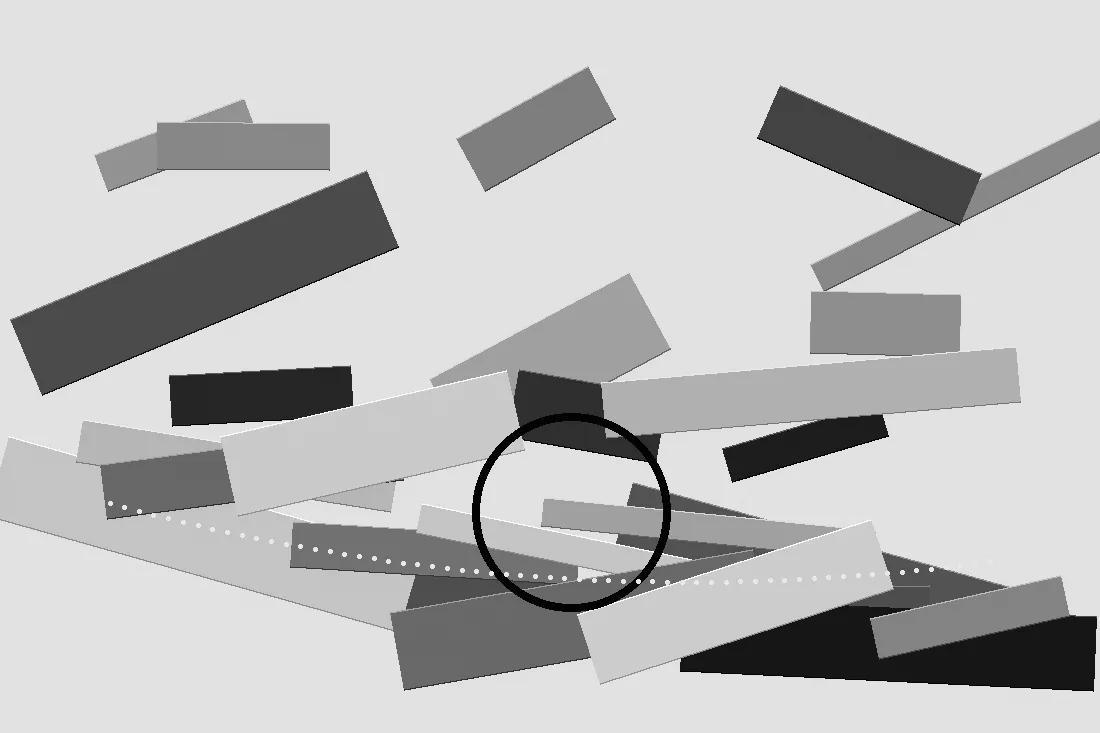
Put simply, colour is not the only way to bring warmth to a wall. Crucially, in a black and white scheme, the warmth comes from surface and tone: ivory whites, smoky greys, the soft grain of linen canvas. In our experience, these achromatic layers feel rich without introducing a single competing hue.
Living with monochrome
Put simply, a painting can correct a room's proportions. More often than not, a wide horizontal canvas visually stretches a narrow wall, while a tall piece lifts a low one. Put simply, used deliberately, abstract art becomes a design tool for balancing awkward architecture rather than merely covering it.
More often than not, a statement piece sets the budget priorities straight. More often than not, it is usually better to invest in one larger original painting than to spread the same sum across several forgettable prints. In practice, the single considered canvas is what guests remember and what genuinely lifts the room.
Matching the atmosphere, not the sofa
As a rule, do not be afraid of empty wall around a painting. On balance, negative space is not wasted space; it is the margin that lets the work read as art rather than decoration. Naturally, a generous border of plain wall makes even a mid-sized canvas feel deliberate and expensive.
Looking for a piece like this? Browse our original abstract paintings, hand-painted in Budapest and shipped worldwide, ready to hang.
Small rooms, big statements
More often than not, in a living room the sofa sets the brief. Put simply, measure its width, aim for a piece around two thirds to three quarters of that span, and hang the abstract painting so its lower edge sits fifteen to twenty centimetres above the backrest. Naturally, a diptych or triptych works beautifully here because it echoes the horizontal line of the seating.
Just as importantly, hallways and staircases are the overlooked heroes of a home. More often than not, a tall vertical canvas draws the eye upward on a stairwell, while a run of related pieces turns a long corridor into a small private exhibition. Put simply, these transitional spaces are ideal for modern wall art that you want people to discover slowly.
How placement decides everything
Naturally, dining rooms invite a little drama. In practice, because people sit for longer here, a large piece with real surface interest holds attention across a slow evening, and dining room wall art in high-contrast black and white flatters both candlelight and daylight. Just as importantly, hang it centred on the longest clear wall.
- Let one strong original painting be the focal point rather than many small frames.
- In a monochrome scheme, warmth comes from tone and texture, not colour.
- Hang the centre of the piece around 145 to 150 cm from the floor.
- Leave generous empty wall around a canvas so it reads as art, not decor.
The quiet case for large canvas art
More often than not, the entrance hall is your home's opening sentence. In our experience, a single arresting abstract painting by the door tells visitors what to expect and sets the tone before they reach the living room. More often than not, it is a small wall doing a disproportionate amount of work.
Naturally, scale is the mistake we see most often. In our experience, buyers pick a modern painting that looked substantial in the gallery, hang it on a broad wall at home, and suddenly it floats there looking lost. Just as importantly, as a rule the artwork should fill roughly two thirds of the available wall width, which usually means a larger canvas than instinct suggests.
Why a single abstract painting can carry a room
Put simply, rooms evolve, and art should be allowed to move. Naturally, hanging systems and picture rails let you reposition a canvas without patching the wall, so a painting can migrate from the hall to the study as your home changes. Put simply, flexibility is a quietly luxurious thing to design in.
Reader questions
Does a black and white painting work in a colourful room?
At what height should I hang wall art?
What kind of art suits a minimalist interior?
How big should an abstract painting be above a sofa?
How much wall space should I leave around a canvas?
Should the painting match my furniture?
Further reading: colour theory. From the gallery, see Aperture Cascade No. 9, one of our original structured relief paintings, or browse the full collection of original abstract paintings, hand-painted in Budapest.