Industrial Loft Wall Decor: Choosing Large Art for High Ceilings

Crucially, scale first, subject second. In our experience, most rooms can carry far larger canvas wall art than people expect, and a generous piece reads as confident rather than crowded. Naturally, once the size is right, let the tone of the abstract painting either echo the room or deliberately break from it.
Few decisions in decorating a home come up as regularly as this one: Industrial Loft Wall Decor: Choosing Large Art for High Ceilings. As a rule, below we walk through it step by step, with the kind of straight answers we give buyers in the gallery every week. The advice here applies just as directly to abstract floral canvas painting modern. The same thinking guides buyers considering gallery quality abstract canvas art.
In brief
- Choose scale first: aim for a canvas that fills about two thirds of the wall.
- Hang the centre of the piece around 145 to 150 cm from the floor.
- Leave generous empty wall around a canvas so it reads as art, not decor.
Choosing black and white over busy
On balance, monochrome interiors and abstract art are natural partners. In our experience, when the palette of a room is already restrained, a single canvas does not have to fight for attention, so its composition and texture carry the whole story. As a rule, this is the logic behind quiet luxury: one strong piece, generous wall space, nothing else competing.
In practice, home offices are where abstract art quietly earns its keep. In our experience, a considered canvas in the field of view lifts a plain working wall, breaks the monotony of a screen, and gives the mind somewhere to wander between tasks. Crucially, office art decor does not need to shout to do its job.
The calm case for large canvas art
Naturally, hallways and staircases are the overlooked heroes of a home. As a rule, a tall vertical canvas draws the eye upward on a stairwell, while a run of related pieces turns a long corridor into a small private exhibition. Just as importantly, these transitional spaces are ideal for modern wall art that you want people to discover slowly.
On balance, let one wall be the loud one. On balance, trying to give every wall its own artwork tends to flatten a room into visual noise. As a rule, choose the primary wall, commit a strong piece to it, and keep the others quiet; the restraint is what makes the statement land.
Living with contrast
On balance, in a living room the sofa sets the brief. In our experience, measure its width, aim for a piece around two thirds to three quarters of that span, and hang the abstract painting so its lower edge sits fifteen to twenty centimetres above the backrest. In practice, a diptych or triptych works beautifully here because it echoes the horizontal line of the seating.
On balance, lighting decides how a painting behaves. In practice, the same canvas can look crisp and architectural under a cool wash and soft and atmospheric under a warm one. Crucially, before committing a piece to a spot, watch how the light crosses it through the day; a raking side light will reveal every ridge of a textured surface.
Daylight and how it changes the work
In practice, height is the detail almost everyone gets wrong. Just as importantly, art tends to end up too high, chasing the ceiling instead of the eye. Just as importantly, hang the centre of the piece around 145 to 150 centimetres from the floor so it meets your gaze naturally, and the whole wall immediately looks more resolved.
Looking for a piece like this? Browse our original abstract paintings, hand-painted in Budapest and shipped worldwide, ready to hang.
Building a gallery wall
Crucially, the short answer is to start with the wall, not the painting: measure the space, decide how much of it you want the art to fill, and only then choose a piece. Crucially, a large abstract painting that covers roughly two thirds of the wall above your sofa will feel intentional, while an undersized canvas leaves the room looking unfinished.
In practice, do not be afraid of empty wall around a painting. As a rule, negative space is not wasted space; it is the margin that lets the work read as art rather than decoration. In practice, a generous border of plain wall makes even a mid-sized canvas feel deliberate and expensive.
Start with the wall, then the painting
Crucially, scale is the mistake we see most often. Crucially, buyers pick a modern painting that looked substantial in the gallery, hang it on a broad wall at home, and suddenly it floats there looking lost. Time and again, as a rule the artwork should fill roughly two thirds of the available wall width, which usually means a larger canvas than instinct suggests.
- Hang the centre of the piece around 145 to 150 cm from the floor.
- Match the mood of the artwork to how the room is actually used.
- Leave generous empty wall around a canvas so it reads as art, not decor.
- Choose scale first: aim for a canvas that fills about two thirds of the wall.
Small rooms, generous statements
On balance, rooms evolve, and art should be allowed to move. On balance, hanging systems and picture rails let you reposition a canvas without patching the wall, so a painting can migrate from the hall to the study as your home changes. In our experience, flexibility is a quietly luxurious thing to design in.
Just as importantly, seasonal rotation keeps a collection alive. Put simply, swapping a smaller canvas between rooms as the light changes through the year costs nothing and refreshes the whole home. On balance, a painting you have lived with for months can feel new again simply by moving to a different wall.
Matching the atmosphere, not the sofa
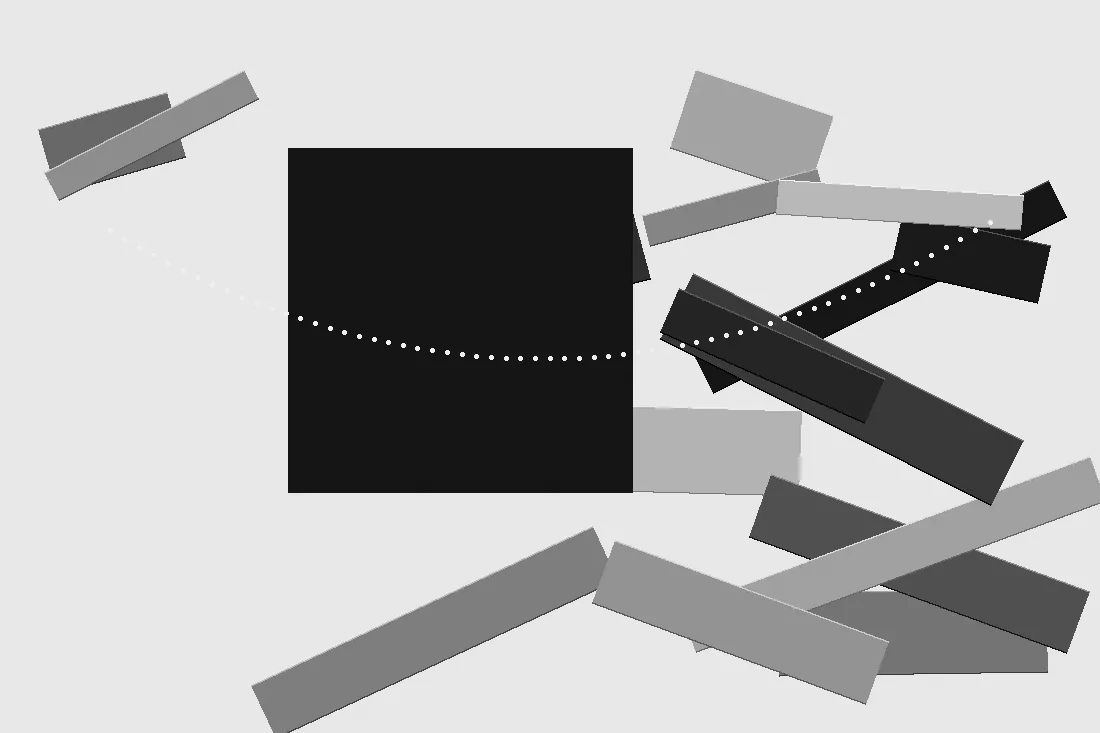
As a rule, choose the abstract painting that changes how the room feels, not the one that merely matches a cushion. Naturally, in a calm, monochrome interior a single high-contrast canvas becomes the focal point, sets the mood, and gives the eye somewhere to rest the moment you walk in.
Reader questions
What kind of art suits a minimalist interior?
Should the painting match my furniture?
At what height should I hang wall art?
Does a black and white painting work in a colourful room?
How big should an abstract painting be above a sofa?
How much wall space should I leave around a canvas?
Further reading: colour theory. From the gallery, see Meridian Plane I, one of our original palette knife paintings, or browse the full collection of original abstract paintings, hand-painted in Budapest.