How to Properly Light Artwork in Your Home: A Gallery Guide
Just as importantly, a calm interior can take one confident gesture. In practice, where the furniture and walls are restrained, an expressive abstract painting with sweeping marks becomes the single point of energy in the room. In our experience, that contrast between still surroundings and a lively canvas is what gives minimalist spaces their tension.
This piece is our full answer to a question collectors ask often: How to Properly Light Artwork in Your Home: A Gallery Guide. More often than not, we have written this to be genuinely useful rather than merely informative, so every section answers a real question buyers ask. It speaks to anyone weighing up contemporary geometric wall art canvas, too. Collectors interested in modern aesthetic wall decor canvas will find the same principles hold.
The essentials
- Let one strong original painting be the focal point rather than many small frames.
- Match the mood of the artwork to how the room is actually used.
- Choose scale first: aim for a canvas that fills about two thirds of the wall.
Choosing colourless over busy
In practice, dining rooms invite a little drama. As a rule, because people sit for longer here, a large piece with real surface interest holds attention across a slow evening, and dining room wall art in high-contrast black and white flatters both candlelight and daylight. As a rule, hang it centred on the longest clear wall.
More often than not, lighting decides how a painting behaves. On balance, the same canvas can look crisp and architectural under a cool wash and soft and atmospheric under a warm one. Just as importantly, before committing a piece to a spot, watch how the light crosses it through the day; a raking side light will reveal every ridge of a textured surface.
When to go big
Put simply, the wall behind a bed is a chance most bedrooms waste. In practice, a single calm canvas there, sized generously and hung low over the headboard, turns a functional room into a restful one. In our experience, keep the tone quiet and let the piece be the last thing you notice at night.
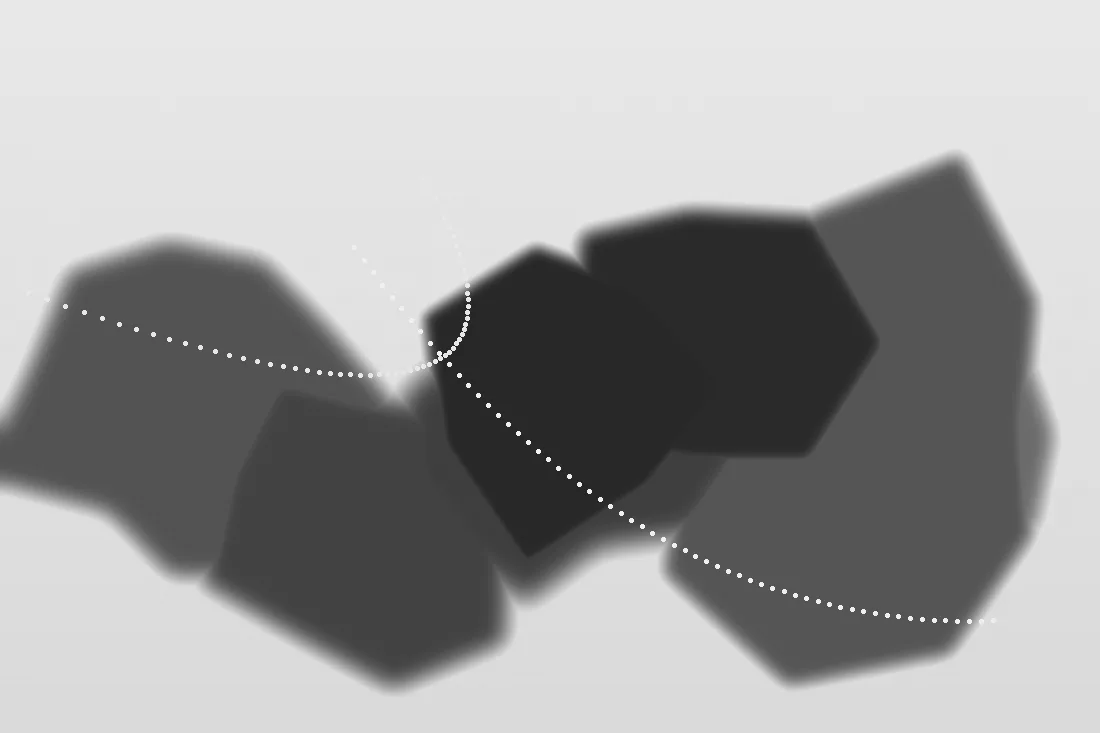
Put simply, choose the abstract painting that changes how the room feels, not the one that merely matches a cushion. More often than not, in a calm, monochrome interior a single high-contrast canvas becomes the focal point, sets the mood, and gives the eye somewhere to rest the moment you walk in.
Matching the atmosphere, not the sofa
Just as importantly, a statement piece sets the budget priorities straight. As a rule, it is usually better to invest in one larger original painting than to spread the same sum across several forgettable prints. As a rule, the single considered canvas is what guests remember and what genuinely lifts the room.
In practice, the bedroom rewards a quieter hand. Put simply, soft graphite and off-white tones above the headboard calm the room without going flat, and a minimalist painting reads as restful rather than demanding. Put simply, keep the framing simple and let the wall breathe; a bedroom painting should be the last thing you notice, not the first.
Building a considered grouping
Just as importantly, ceiling height changes the brief entirely. Put simply, under a high loft ceiling, small frames disappear, so oversized canvas art or a vertical format is the only thing that holds the scale. As a rule, industrial interiors in particular were made for large, textured abstract paintings.
Looking for a piece like this? Browse our original abstract paintings, hand-painted in Budapest and shipped worldwide, ready to hang.
Start with the wall, then the artwork
Just as importantly, scale is the mistake we see most often. Put simply, buyers pick a modern painting that looked substantial in the gallery, hang it on a broad wall at home, and suddenly it floats there looking lost. As a rule, as a rule the artwork should fill roughly two thirds of the available wall width, which usually means a larger canvas than instinct suggests.
More often than not, a painting can correct a room's proportions. On balance, a wide horizontal canvas visually stretches a narrow wall, while a tall piece lifts a low one. Crucially, used deliberately, abstract art becomes a design tool for balancing awkward architecture rather than merely covering it.
Where depth earns its place
Time and again, a single abstract painting can anchor an entire room in a way that a shelf of small objects never will. More often than not, when the canvas is large enough to command the wall, the eye settles on it first and the rest of the interior arranges itself around that focal point. This is why so many designers reach for one generous piece of canvas wall art rather than a scatter of smaller frames.
- Hang the centre of the piece around 145 to 150 cm from the floor.
- Choose scale first: aim for a canvas that fills about two thirds of the wall.
- Black and white abstract art will not clash with a scheme you later change.
- Leave generous empty wall around a canvas so it reads as art, not decor.
Small rooms, big statements
Naturally, good placement is mostly arithmetic: hang the centre of the abstract painting at eye level, about 145 to 150 centimetres from the floor, and leave a hand-width of breathing room around it. As a rule, get those two numbers right and even a modest canvas looks like it was made for the wall.
Naturally, height is the detail almost everyone gets wrong. On balance, art tends to end up too high, chasing the ceiling instead of the eye. More often than not, hang the centre of the piece around 145 to 150 centimetres from the floor so it meets your gaze naturally, and the whole wall immediately looks more resolved.
Lighting and how it changes the work
Time and again, open-plan spaces need art to do the work that walls used to. More often than not, a large canvas can anchor a living zone within a broader room, signalling where one function ends and another begins. More often than not, used this way, a painting becomes a piece of soft architecture as much as decoration.
Questions buyers ask
How big should an abstract painting be above a sofa?
How much wall space should I leave around a canvas?
Should the painting match my furniture?
Does a black and white painting work in a colourful room?
What kind of art suits a minimalist interior?
At what height should I hang wall art?
Further reading: composition in the visual arts. From the gallery, see Weathered Interval V, one of our original line art paintings, or browse the full collection of original abstract paintings, hand-painted in Budapest.