Earthy Tones on Canvas: Bringing Warmth and Nature into Your Interior
In practice, colour is not the only way to bring warmth to a wall. Just as importantly, in a black and white scheme, the warmth comes from surface and tone: ivory whites, smoky greys, the soft grain of linen canvas. In practice, these achromatic layers feel rich without introducing a single competing hue.
Few decisions in decorating a home come up as regularly as this one: Earthy Tones on Canvas: Bringing Warmth and Nature into Your Interior. Naturally, this guide gathers what we have learned working with collectors, designers and painters, so you can decide with confidence. Collectors interested in black and white modern canvas art will find the same principles hold. This is a sound starting point for abstract canvas art for modern apartment as well.
The essentials
- Black and white abstract art will not clash with a scheme you later change.
- Let one strong original painting be the focal point rather than many small frames.
- Match the mood of the artwork to how the room is actually used.
Where texture earns its place
Time and again, consider the sightline between rooms. Time and again, when two spaces open onto each other, a painting visible through the connecting doorway ties them together. Just as importantly, repeating a tone or a format across that threshold gives an open-plan home a sense of quiet continuity.
In our experience, a painting can correct a room's proportions. In our experience, a wide horizontal canvas visually stretches a narrow wall, while a tall piece lifts a low one. In practice, used deliberately, abstract art becomes a design tool for balancing awkward architecture rather than merely covering it.
Small rooms, generous statements
Time and again, gallery walls work when they are planned rather than accumulated. More often than not, lay the frames out on the floor first, keep the gaps even at five to eight centimetres, and let one larger abstract painting act as the visual keystone. On balance, a grouping built around a clear anchor never reads as clutter.
In our experience, open-plan spaces need art to do the work that walls used to. In practice, a large canvas can anchor a living zone within a broader room, signalling where one function ends and another begins. Time and again, used this way, a painting becomes a piece of soft architecture as much as decoration.
The considered case for large canvas art
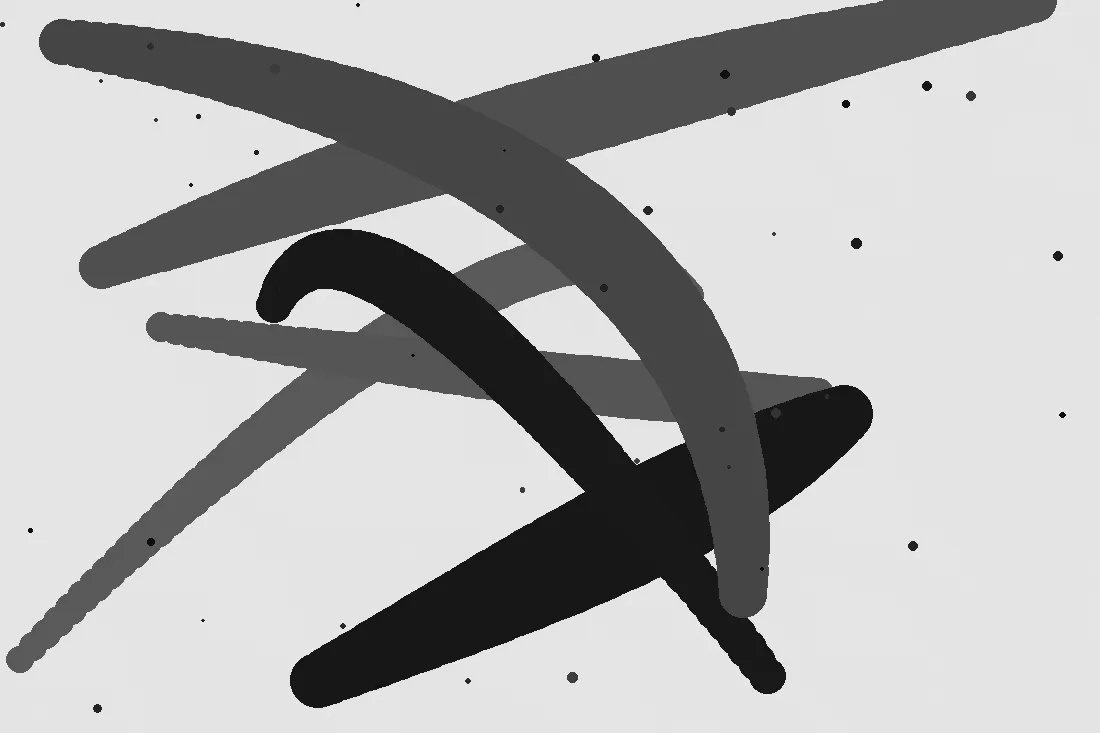
On balance, a calm interior can take one confident gesture. Put simply, where the furniture and walls are restrained, an expressive abstract painting with sweeping marks becomes the single point of energy in the room. More often than not, that contrast between still surroundings and a lively canvas is what gives minimalist spaces their tension.
In practice, think about the piece from the doorway. Time and again, the first view of a room is usually from its threshold, so position your statement painting where it lands in that opening sightline. As a rule, a canvas that greets you as you enter shapes the whole impression of the space.
Matching the atmosphere, not the sofa
Time and again, framing is a decision, not an afterthought. Time and again, a slim floating frame gives contemporary canvas art a crisp, finished edge, while a gallery-wrapped canvas with painted sides can hang frameless for a cleaner, more modern look. Naturally, either way the edge should feel intentional.
Looking for a piece like this? Browse our original abstract paintings, hand-painted in Budapest and shipped worldwide, ready to hang.
Choosing colourless over busy
In our experience, do not be afraid of empty wall around a painting. Just as importantly, negative space is not wasted space; it is the margin that lets the work read as art rather than decoration. More often than not, a generous border of plain wall makes even a mid-sized canvas feel deliberate and expensive.
In practice, a single abstract painting can anchor an entire room in a way that a shelf of small objects never will. On balance, when the canvas is large enough to command the wall, the eye settles on it first and the rest of the interior arranges itself around that focal point. In practice, this is why so many designers reach for one generous piece of canvas wall art rather than a scatter of minor frames.
A room-by-room approach to styling
On balance, dining rooms invite a little drama. In our experience, because people sit for longer here, a large piece with real surface interest holds attention across a slow evening, and dining room wall art in high-contrast black and white flatters both candlelight and daylight. Naturally, hang it centred on the longest clear wall.
- Leave generous empty wall around a canvas so it reads as art, not decor.
- Let one strong original painting be the focal point rather than many small frames.
- Hang the centre of the piece around 145 to 150 cm from the floor.
- Black and white abstract art will not clash with a scheme you later change.
How height decides everything
Just as importantly, texture is what separates a memorable canvas from a flat print. On balance, palette knife ridges and impasto build shadow that shifts as you move past the work, so a heavily worked surface stays interesting for years. Naturally, in a mostly smooth interior, that tactile quality is a welcome contrast.
Just as importantly, scale first, subject second. More often than not, most rooms can carry far larger canvas wall art than people expect, and a generous piece reads as confident rather than crowded. Time and again, once the size is right, let the tone of the abstract painting either echo the room or deliberately break from it.
Getting the size right
More often than not, let one wall be the loud one. In our experience, trying to give every wall its own artwork tends to flatten a room into visual noise. In practice, choose the primary wall, commit a strong piece to it, and keep the others quiet; the restraint is what makes the statement land.
Frequently asked
Does a black and white painting work in a colourful room?
How big should an abstract painting be above a sofa?
Which rooms benefit most from abstract art?
What kind of art suits a minimalist interior?
How much wall space should I leave around a canvas?
At what height should I hang wall art?
Further reading: the discipline of interior design. From the gallery, see Drifting Cascade, one of our original impasto texture paintings, or browse the full collection of original abstract paintings, hand-painted in Budapest.