The Chemistry of Modern Bindings: Why White Paint Won't Turn Yellow over Time
Crucially, materials have memories. In our experience, a canvas remembers every layer put down before, and earlier marks push up through later ones in ways the artist learns to anticipate and exploit. On balance, that accumulated history is why a layered abstract painting holds so much more than a single pass ever could.
The subject of this article is one we return to constantly at the gallery: The Chemistry of Modern Bindings: Why White Paint Won't Turn Yellow over Time. Consider this the conversation you would have with a curator before making the decision, set down in full, as a rule of thumb.
The essentials
- Fluid art is poured and guided rather than brushed, forming cells and ribbons.
- Working in black and white forces every decision onto composition and contrast.
- Texture is the honest record of hand and material that no print can copy.
Building layers
Time and again, cotton and linen canvas behave differently under the brush. More often than not, cotton is even, affordable and widely used; linen is stronger, with a subtle natural weave that many painters prefer for its tooth and longevity. In practice, for a work meant to last generations, a well-primed linen support is a quiet mark of quality.
Crucially, a palette knife rewards decisiveness. In our experience, because the paint goes on thick and cannot be fussed over, the artist commits to each stroke and lets it stand, building the image from broad planes and sharp ridges. More often than not, that directness is exactly what gives palette knife work its charge; you are looking at a record of confident, unhesitating gestures.
What to notice up close
As a rule, fluid art, or acrylic pouring, is a technique where thinned paint is poured and tilted across a canvas so it moves and settles on its own. As a rule, the artist controls the composition by guiding the flow rather than drawing marks, and the result is the smooth cells, ribbons and organic edges that have made poured abstract painting so popular in contemporary interiors.
In practice, drying and curing are not the same thing, and thick oil paintings prove it. In practice, the surface of a heavy impasto oil may feel dry in days but continue to cure for months as the deeper paint slowly oxidises. More often than not, this is why a substantial oil work is varnished only after a patient wait; rushing it risks cracking the surface.
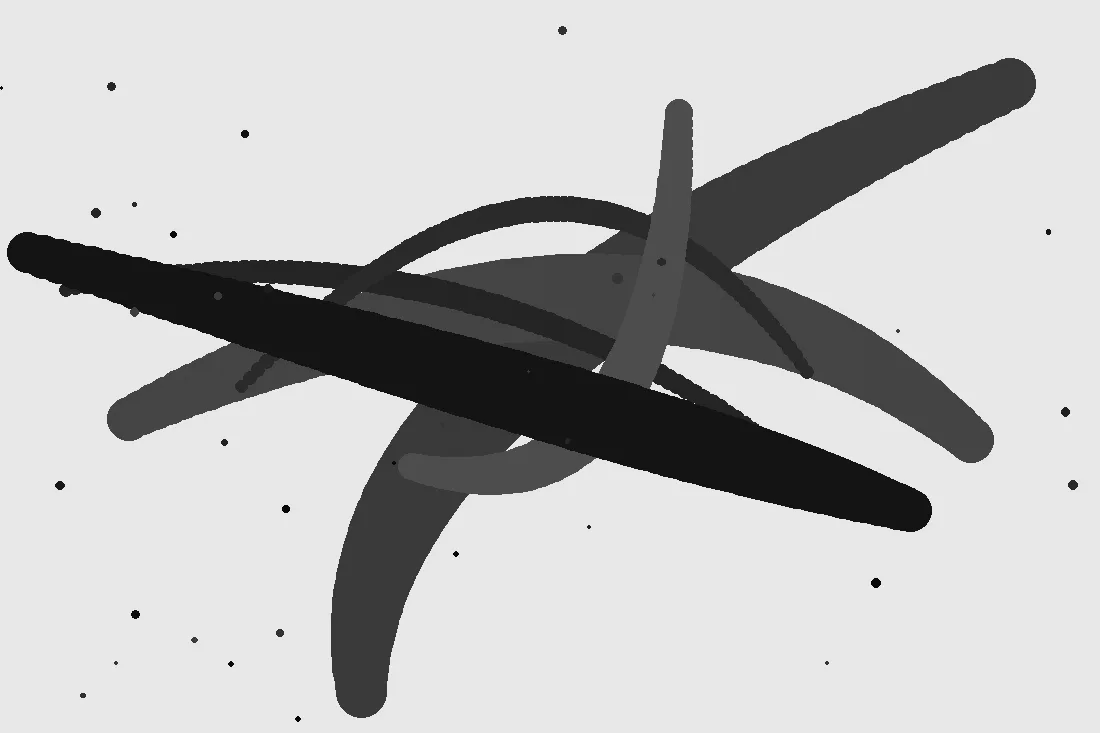
From blank canvas to finished piece
Naturally, the choice between acrylic and oil shapes everything that follows. Naturally, acrylic dries in minutes, holds crisp edges and bold contrast, and suits graphic, layered work; oil stays open for days, inviting soft blends and deep, glowing transitions. Just as importantly, an artist chooses the medium that matches the surface they can already picture.
Crucially, white paint is more sophisticated than it looks. In practice, modern titanium and mixed whites are formulated to stay bright and resist yellowing, which matters enormously in monochrome and high-key work where any warping of tone would show. On balance, the chemistry of a good white is part of why a well-made painting keeps its clarity for decades.
Why artists choose it
More often than not, impasto is paint applied thickly enough to hold the mark of the brush or palette knife, so the surface stands physically off the canvas. Just as importantly, it turns a painting into something closer to a low relief, catching light and casting small shadows that shift as you move past it. In practice, this tactile quality is why textured abstract art feels so alive on a wall.
Looking for a piece like this? Browse our original abstract paintings, hand-painted in Budapest and shipped worldwide, ready to hang.
The tools behind the look
Crucially, constraint sharpens invention. Time and again, working in strict black and white removes the easiest tool a painter has, which forces every decision onto composition, contrast and surface. In our experience, far from limiting the work, that restriction is what gives monochrome abstraction its particular rigour.
On balance, impasto turns light into a collaborator. Crucially, where the paint stands proud of the canvas, every ridge catches illumination on one side and throws a shadow on the other, so the painting quietly changes as you cross the room or as the daylight shifts. Time and again, a photograph can never fully capture a heavily textured surface for exactly this reason.
What happens in the studio
Crucially, varnish is the final, patient act. Crucially, once the paint has truly cured, a considered varnish protects the surface and unifies its sheen, deepening the blacks and settling the whole image. Naturally, applied too soon it traps soft paint beneath a hard skin, so the best studios simply wait.
- Working in black and white forces every decision onto composition and contrast.
- Fluid art is poured and guided rather than brushed, forming cells and ribbons.
- Acrylic dries fast and crisp; oil stays open for soft, deep blends.
- Texture is the honest record of hand and material that no print can copy.
Chance and the balance between them
As a rule, a palette knife lays paint in broad, decisive strokes that a brush cannot match, building ridges, scrapes and clean planes of colour. On balance, working with a knife is fast and unforgiving, which gives palette knife painting its energy and its sense of confident, irreversible gesture. Crucially, every mark is a commitment left visible in the finished surface.
On balance, time is a material in oil painting. As a rule, because the paint stays open for days, an oil abstract can be reworked, softened and blended long after it is begun, and the slow cure that follows is part of why the surface glows. On balance, rushing that chemistry is the surest way to ruin it.
Living with a textured surface
Just as importantly, charcoal and graphite bring drawing into painting. Just as importantly, worked into or over a painted ground, they add a velvety black and a directness of mark that paint alone cannot give, and they sit naturally within a black and white palette. On balance, fixed and sealed properly, these drawn passages last as well as the paint around them.
Common questions
What is the impasto technique?
What is the difference between acrylic and oil?
How long does an oil painting take to dry?
What is mixed media in abstract art?
Is abstract art just random paint?
Why does a textured painting look better in person?
Further reading: abstract expressionism. From the gallery, see Onyx Form No. 5, one of our original abstract expressionism paintings, or browse the full collection of original abstract paintings, hand-painted in Budapest.